Samyang 20 F18 and Nikon 20 F18 Best Compare Review
What is Information technology?
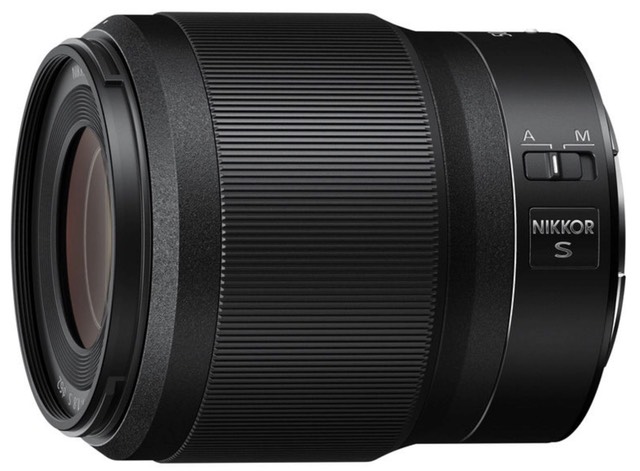
The 50mm f/i.8 South is the second in Nikon'due south prime lens offerings for the Z system. Surprisingly, information technology'south pretty much the same size as the 35mm f/1.8 S (in this case 3.4" x iii", or 86.5 x 76mm).
Similar the 35mm, the 50mm uses the same plastic pare covering the metal/drinking glass internals. That look is very bones, and for some reason seems to be off-putting to some. I suppose Nikon could take gone to a stylist and gotten some highlights blown in, but I don't spend a lot of time looking at lenses. I like practicality, and this design is robust and allows for a lot of weather seal gaskets. The ane size barrel also means that it is simple to refit my bags to hold the lens, too.
The 50mm is a little heavier than the 35mm at 14.seven ounces (415g). In practice, I don't find the difference.
The extra weight probably comes from the optical design. We've got 12 elements in 9 groups, with 2 aspherical and 2 ED elements. Nano blanket is used internally to control reflections and flare. I thing that's noteworthy most the 50mm optical blueprint is that it'southward very unlike than we're used to for a 50mm. It very well may be the showtime lens we got that truly starts to take advantage of the Z mountain flexibility.
The forepart element is slightly concave! The rear elements are very large. Nikon appears to be using a very unlike optical approach on this lens. We'll run into what that actually means when we become to the results later in the review, but suffice it to say this is the first time I've seen Nikon apply some very non-traditional optical design for a traditional optic.
A nine bract circular aperture diaphragm sits inside, with apertures available from f/1.eight to f/16.
Minimum focus distance is well-nigh 16" (0.4m), and the maximum reproduction ratio is a not-impressive ane:vi.7. Probably the but affair I wanted a bit more of from this lens was a bit more focus range. Even i:v would take been preferable. Focus is done internally using heart elements, and using a stepping motor, much like the AF-P lenses.
Nikon claims "distance information...[is] visible in EVF with manual focusing." Not quite. That consists basically of a bar with the left side labeled with a bloom and the right side labeled with the infinity sign. That'southward not distance "information." It's an idiot bar.
Nikon also claims that focus breathing is effectively compensated. I've been able to verify that in apply. The focus motor, aperture diaphragm and control ring (focus band unremarkably) are all said to be "minimized," but if yous put your ear upward to the lens y'all'll definitely here it wheezing. An on-photographic camera mic may pick that up (the internal ones do).
Upwards front end we have 62mm filter threads and a supplied HB-ninety lens hood (B=bayonet). The hood is relatively deep with a flake of petal to it.
The lens is made in Mainland china and lists for US$600. Y'all get a flimsy ane-size-fits-all pouch with the lens, ala what Fujifilm has been doing.
Nikon's Web page for the lens
Source of reviewed lens: purchased
How's it Handle?
This department is going to await just similar the 35mm review.
One trouble I have is that the focus ring is wide and slips easily. That means that when you're trying to mountain or remove the lens you have a tendency to grab by the focus ring and then you take no leverage to twist the lens to mountain it. Yous can't really grab the slippery area close to the photographic camera hands if you have big hands. Thus, go used to grabbing the very forepart of the lens when twisting it on and off the mountain.
The focus ring itself is every bit smoothen and tranquility as whatever I've seen recently. Unfortunately, Nikon's hysteresis is wrong. It's very hard to precisely manual focus the lens, and the rangefinder indicators aren't a lot of assist there equally they'll just brandish blinking > < right upwardly to the moment yous obtain focus, at which point even the slightest movement of the ring starts triggering >°< flicker (the green in-focus indicator tends to flicker between light-green and reddish, as well).
Of form, yous're most likely letting the camera exercise the heavy lifting, especially considering how precise the AF-Due south focus on the Z lenses can be. So still users are just going to stick to autofocus. I wonder about video users, though. The lens feels near out-of-command during video operation with manual focus. Putting a gear ring on the lens isn't likely to help a lot given how Nikon's chosen the rotation response.
How's it Perform?
Sharpness: Let'due south just say upwards front that this is the best 50mm Nikon has fabricated. The question then becomes "just how skillful is it?"
Actually skillful. Central sharpness is as good as I've seen in the 50mm realm wide open. That sharpness declines a tiny scrap as you lot get out to the DX crop boundary, then clearly declines into the corners. Still, in the corners this is the all-time 50mm result I've seen at f/ane.8 recently (I haven't tested the Zeiss Otus 55mm). The new Nikkor is clearly better than the Sigma 50mm f/1.4 Fine art I tested at f/i.8, center, DX boundary, and FX corner.
Even stopping down to f/ii brings some vigil back into the corner, but you really need to get to f/4 to go everything this lens tin deliver (which is a lot). f/5.vi is technically the best aperture across all measurements, but f/4 was awful close and where nigh people will recollect the lens operates best. And yep, those one-time F-mountain Nikkors aren't even in the same league every bit this S lens, regardless of which one you choose (f/1.four, f/1.8, D, G, etc.). Certainly not wide open, but not stopped down, either.
Coma is well corrected, though a fleck of it is all the same visible; this is certainly dark and day better than the old F-mount Nikkors. Pinpoints tend to get a minor elongation, just that's compared to complete smear you see with most 50's. (I should note that I do look at epitome samples from other shooters; I've noticed a pocket-sized bit of side-to-side variation at the extreme corners, which would tend to indicate slight lens element tilting. Near people probably wouldn't notice this at all, so it's non something I would call a flaw. But it does seem to indicate that we need to be on the lookout man for sample variation. My sample seems pretty close corner to corner.)
Like the other Z lenses I've tested, there doesn't seem to be a about/far bias in the lens pattern. What I write is true pretty much at the close focus distance as well equally at infinity. This is far different than we're used to with the F-mountain lenses.
Focus shift: None. (Okay, technically in that location's a teeny tiny bit, but it's less than the blur circumvolve, so what I tin can measure out is ignorable.)
Linear distortion: The lens has a wee chip of barrel distortion to information technology, a bit surprising at this focal length. This seems to exist very simple curving, with no complications, thus is hands corrected (the in-camera corrections render information technology near to null). The base of operations distortion is not strong plenty that most people would attempt to right it, though.
Chromatic Aberration: Clear longitudinal CA out through about f/3.5, after which betoken the lens seems pretty tight on color for a fast lens. Latitudinal CA is minimal.
Vignetting: Surprisingly good. Articulate corner drib-off (almost a max of i.5 stops), but a fairly wide central surface area mostly free from darkening. The fall-off into the corners is too feathered well. At somewhere only above f/ii.8 I'd say the vignetting becomes mostly ignorable, and that's admittedly truthful if yous've turned on Vignette Control in the photographic camera (which is picked upward by the Adobe converters).
Flare: Of the three Z lenses then far, the 50mm has the nearly flare and ghosting of the bunch, though I wouldn't call it bad at all. I meet more element reflection in the 50mm when flare is produced than in the 35mm, and it's multi-colored. Withal, very decently controlled for a fast lens.
Bokeh: clear onion-skinning plus elliptical distortion at the corner, though the blurred highlight circles don't have a really strong bright edge as does the 35mm; I was surprised that the longitudinal CA didn't seem to impact the bokeh mistiness edges much. Like virtually recent Nikkors, the 50mm f/i.8 S has a very nice flow from focus plane to out-of-focus, too. Overall, most people are going to like the bokeh of this lens because it doesn't really accept a flaw that jumps out at you. I have no thought what the dpreview videographers were talking about ;~). Perchance they should turn VR off.
Concluding Words
At that place's no mistaking this 50mm Z lens: it's the best 50mm Nikon has e'er produced (obviously, we take to compare apples to apples and practice the comparing at f/1.eight or f/2; if you demand f/i.two or f/1.4, then obviously this isn't the lens for you lot).
You don't gain anything in size. If yous put the 50mm f/1.8G on the FTZ adapter, you're pretty shut to the size of the 50mm f/i.viii S. What yous practise gain is much faster focusing, more than precise focusing, and clearly better optics.
Is that worth US$600? It is if you demand and use this focal length, in my opinion. Considering how proficient it is, I'd also consider it a bargain at this cost. Unfortunately, most people are used to buying inexpensive 50mm optics, so they run across the US$600 price every bit high. They're wrong. Yous clearly get what you lot pay for here, and more than than you'll expect.
Almost my only drawbacks are (1) Nikon but hasn't perfected wing-by-wire transmission focusing; and (2) the 1:half dozen.7 maximum magnification ratio (16" close focus) is less than I'd like at this focal length (I'd really like to encounter 1:4, or at least 1:5). The bokeh could be ameliorate, but it isn't bad.
And so far, Nikon's optical engineers have been pulling piddling gems out of their hats in the Z organisation. The bones specs at offset don't expect drool worthy on these Z lenses (e.m. f/1.8 or f/four), only so yous first looking at images. Crisp and clear imaging, nice focus and out-of-focus rendering, fantabulous behavior far from the central axis, plus less astigmatism and coma all combine together to provide pretty much everything you're going to want when you're backing that lens with a high resolution 45mp sensor.
At this point, I'yard looking forward to the 20mm and 85mm f/one.8 Z lenses Nikon says they'll produce. If those lenses live upwardly to the standards the 35mm and 50mm gear up, that's going to exist quite an f/1.eight prime gear up (also joined by a 24mm, too). Indeed, the 24-70mm f/4 is correct upwardly in that location in optical performance, too (and y'all have to imagine the 24-70mm f/2.eight will be fifty-fifty better). So I tin can imagine some folk ownership a 20mm, 24-70mm, and 85mm as their primary lens set if Nikon continues to make neat Z lenses. Whether you add this 50mm f/1.eight to the mix will depend upon how much you value a fast "normal" lens.
Recommended (2020 to present)
Support this site by purchasing from the following advertiser:
Source: https://www.sansmirror.com/lenses/lens-reviews/lenses-for-nikon-z/nikon-50mm-f18-s-lens-revie.html
0 Response to "Samyang 20 F18 and Nikon 20 F18 Best Compare Review"
Enviar um comentário